
A racing heart before a meeting that isn’t even stressful. A tight chest on an ordinary Tuesday. Stomach pain that shows up for no clear reason. Long before the mind catches up and names it “anxiety,” the body has usually already been sounding the alarm — and for many people, the physical symptoms of anxiety show up first, misread as a heart problem, a stomach issue, or simple exhaustion. These anxiety body symptoms are real, measurable, and far more common than most people realize.
Why Anxiety Feels Physical (The Science in Plain English)
Anxiety activates the body’s fight-or-flight response, releasing stress hormones like adrenaline and cortisol that were designed for short bursts of real danger. In the moment, the nervous system can’t fully distinguish between a genuine threat and a stressful email — it reacts the same way either time, flooding the body with the same physiological changes: a faster heartbeat, tighter muscles, shallower breathing, redirected blood flow away from digestion.
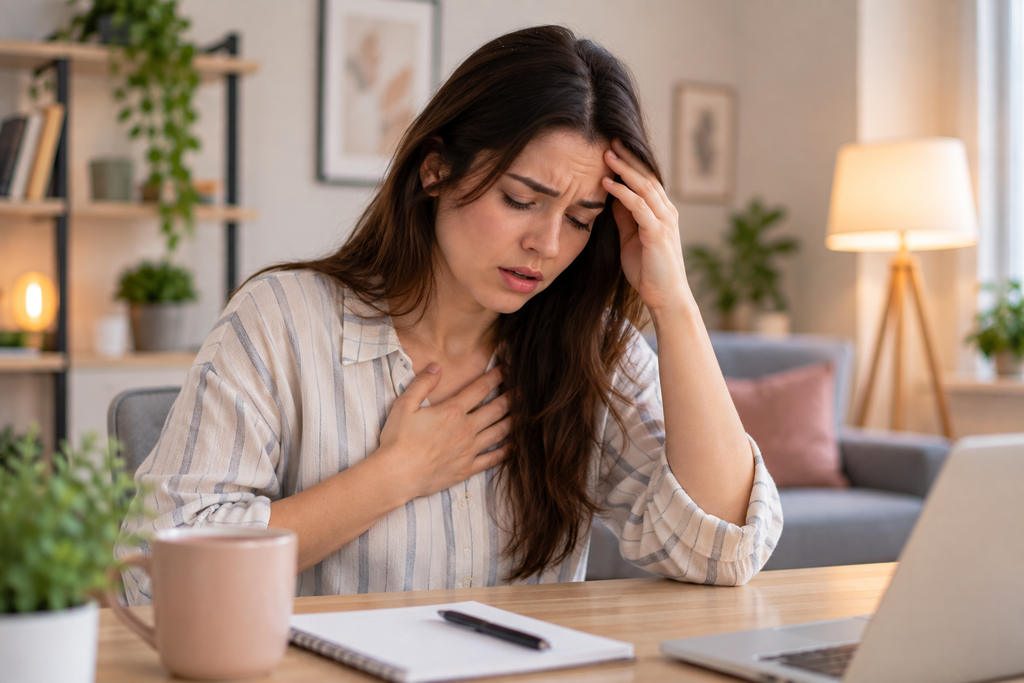
When this response gets triggered occasionally, it resolves quickly. When it gets triggered constantly — as it does with chronic anxiety — the body stays in a low-grade state of alert for hours, days, or longer, and that sustained activation is exactly what produces the physical toll people feel without always connecting it back to anxiety.
This is also why anxiety so rarely announces itself with the word “anxiety.” Most people notice the racing heart, the tight chest, or the stomach churning long before they consciously register feeling worried or afraid. The physical symptoms arrive first because the stress response is a body-level reaction, not a thought — the mind often only catches up and supplies the emotional label afterward, if it catches up at all.
12 Physical Symptoms of Anxiety Most People Don’t Connect
Chest Tightness or Pain
Anxiety can cause the chest muscles to tighten and breathing to become shallow, producing a pressure or ache that feels alarmingly similar to a cardiac event. Anxiety chest pain is one of the most common reasons anxious patients end up in an emergency room.
Racing Heart or “Skipped Beats”
A surge of adrenaline speeds up the heart rate and can create the sensation of a skipped or extra beat (a palpitation). It’s unsettling, but in the absence of underlying heart disease, it’s rarely dangerous on its own.
Shortness of Breath
Shallow, rapid breathing — sometimes bordering on hyperventilation — is a hallmark of the body’s stress response, and it can leave people feeling like they can’t get a full breath even when oxygen levels are normal.
Numbness and Tingling in Hands or Face
Rapid breathing changes the balance of oxygen and carbon dioxide in the blood, which can produce tingling or numbness in the fingers, lips, or face. It’s uncomfortable but typically resolves once breathing slows back down.
Nausea, Stomach Pain, or IBS Flare-Ups
The gut is densely wired to the nervous system, which is why anxiety so often shows up as stomach pain, nausea, or a flare-up of irritable bowel syndrome. Chronic anxiety can genuinely disrupt digestion, not just the perception of it.
Dizziness or Feeling “Off-Balance”
Rapid breathing and blood pressure changes during anxiety can cause lightheadedness or a swaying, off-balance feeling, particularly during a spike in symptoms.
Muscle Tension (Especially Neck and Jaw)
Chronic anxiety keeps muscles braced as if bracing for impact, and the neck, shoulders, and jaw tend to carry the most tension. Jaw clenching or teeth grinding at night is a frequent, often unrecognized anxiety symptom.
Headaches and Migraines
Sustained muscle tension and stress hormone fluctuations are well-documented triggers for tension headaches and can worsen migraine frequency in people already prone to them.
Sweating and Hot Flashes
The fight-or-flight response activates sweat glands as part of its preparation to react quickly, which is why sudden sweating or flushed, hot skin often accompanies an anxious moment even with no physical exertion involved.
Trembling or Shaking
Adrenaline primes the muscles for action, and when that energy has nowhere to go, it often shows up as a visible tremor in the hands or a general shakiness throughout the body.
Fatigue That Rest Doesn’t Fix
Staying in a heightened state of alert is physically draining. Many people with chronic anxiety describe a bone-deep tiredness that a full night’s sleep doesn’t touch, because the nervous system never fully powers down.
Sleep Disturbances
Racing thoughts at bedtime, frequent waking, or difficulty falling back asleep are extremely common with anxiety, and the resulting sleep debt tends to make every other physical symptom on this list worse.
Anxiety Symptoms vs Heart Attack — How to Tell (Important)
“Is it anxiety or something else?” is one of the most urgent questions people ask themselves mid-episode, and understandably so — anxiety and cardiac symptoms overlap so closely that it is never safe to self-diagnose in the moment. Some general patterns can help distinguish the two, but they are not a substitute for emergency evaluation:
- Onset: Anxiety-related chest tightness often builds gradually or appears with a stressful trigger; a heart attack can come on suddenly, sometimes during physical exertion.
- Pain quality: Anxiety tends to produce a tight, achy, or pressure-like sensation; cardiac pain is more often described as crushing or squeezing, sometimes radiating to the arm, jaw, or back.
- Duration: Anxiety symptoms typically ease within 20–30 minutes as the stress response calms down; cardiac symptoms often persist or worsen.
If there is any doubt — chest pain that is new, severe, radiating, or accompanied by sweating, nausea, or shortness of breath — call 911 or go to the nearest emergency room immediately. It is always safer to rule out a cardiac event first and address anxiety afterward, not the reverse.
When Physical Anxiety Becomes a Panic Attack
A panic attack is what happens when these physical symptoms spike all at once and peak within about ten minutes — a sudden wave of chest tightness, racing heart, shortness of breath, dizziness, and a sense of losing control or impending doom. Panic attacks are intensely physical, which is exactly why so many first-time sufferers assume something is medically wrong with their heart or lungs. While a single panic attack isn’t dangerous, frequent or recurring episodes are a strong signal that the underlying anxiety needs a proper evaluation rather than repeated ER visits that keep coming back clear.
Getting Help for Anxiety in Las Vegas
If physical symptoms have been showing up regularly and a doctor has already ruled out other medical causes, the next step is usually a psychiatric evaluation rather than more testing. A board-certified Las Vegas psychiatrist can assess whether anxiety is driving these symptoms and build a treatment plan that may include therapy, medication management, or both.
At Paramount Healthcare Services, evaluations are led by Dr. Chidiogo Nwokike, a board-certified Family Psychiatric Mental Health Nurse Practitioner treating patients across Las Vegas and the greater Nevada area. The practice offers same-day telehealth in Nevada for patients who need to be seen quickly, along with in-office visits at 1705 S Eastern Ave, Las Vegas, NV 89104, for those who prefer to come in. Many patients searching for a Las Vegas psychiatrist are surprised to learn that anxiety-related physical symptoms are one of the most common reasons people are referred for psychiatric evaluation in the first place, often after cardiology or gastroenterology workups come back clear. A full mental health assessment is the starting point, and treatment for anxiety can typically begin within the first visit or two.
FAQs
Can anxiety cause physical pain?
Yes. Anxiety commonly produces real physical pain, including chest tightness, headaches, muscle aches, and stomach pain, driven by sustained muscle tension and stress hormone activity rather than an underlying injury or disease.
How long do anxiety symptoms last?
A single anxiety spike or panic attack usually peaks and resolves within 20 to 30 minutes, but chronic anxiety can produce lower-grade physical symptoms — fatigue, tension, digestive upset — that persist for weeks or months without treatment.
What’s the fastest way to calm down during a panic attack?
Slow, controlled breathing — inhaling for four counts, holding for four, and exhaling for six to eight — helps signal the nervous system to stand down. Grounding techniques, such as naming five things you can see and four things you can touch, can also help interrupt the spiral while the body’s stress response settles.
Your Body Has Been Trying to Tell You Something
If these physical symptoms sound familiar and medical causes have already been ruled out, it may be time to look at what’s underneath them. Same-day telehealth in Nevada makes it possible to get an evaluation without waiting weeks for an opening.
Book a psychiatric evaluation with Paramount Healthcare Services in Las Vegas today.


One Response