
The main difference in a panic attack vs anxiety attack is speed. A panic attack is a sudden surge of intense fear that peaks within minutes. An anxiety attack is an informal term for anxiety that builds gradually around a stressor and can last for hours. The difference between an anxiety attack and a panic attack decides what helps in the moment. If either keeps coming back, anxiety treatment in Las Vegas is available in person or by telehealth.
What Is a Panic Attack?
A panic attack is a defined clinical event in the DSM-5-TR, the manual clinicians use to diagnose mental health conditions. It requires an abrupt surge of fear or discomfort with four or more of these symptoms:
- Pounding heart or racing pulse
- Sweating, trembling or shaking
- Shortness of breath or a choking sensation
- Chest pain or discomfort
- Nausea, dizziness or feeling faint
- Chills or heat sensations
- Numbness or tingling
- Feeling unreal or detached from yourself (derealization or depersonalization)
- Fear of losing control or of dying
Some attacks are expected, set off by a known fear such as flying, driving or crowds. Others are unexpected and start from a calm state. Nocturnal panic attacks are a type of unexpected attack: they jolt you awake with a racing heart and dread, without a nightmare causing them.
What Is an Anxiety Attack?
An anxiety attack is not a diagnosis. People use the term when worry rises to an overwhelming level, usually around a deadline, a medical test, money or a conflict. Typical signs:
- Constant worry or a sense of dread
- Restlessness and muscle tension
- Racing, looping thoughts
- Irritability, fatigue and trouble sleeping
- A faster heartbeat, but milder than in panic
Our post on the physical symptoms of anxiety explains the body signals.
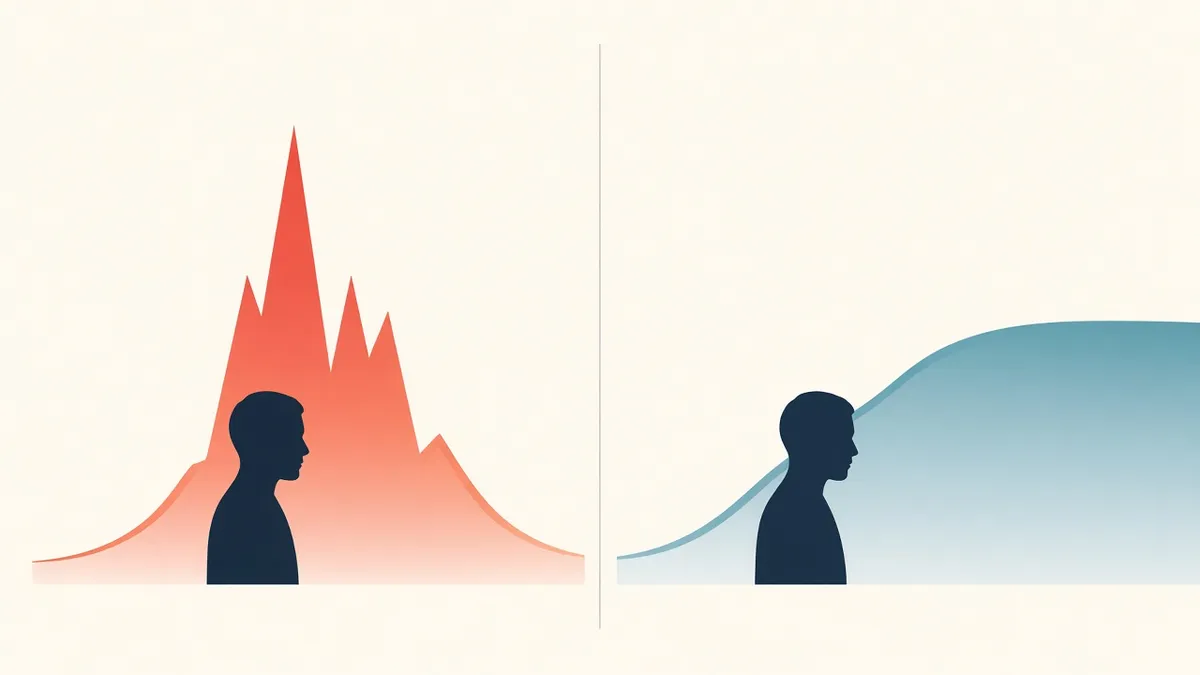
Anxiety Attack vs Panic Attack: Side-by-Side
| Feature | Panic attack | Anxiety attack |
|---|---|---|
| Onset | Abrupt, often without warning | Gradual, over minutes to hours |
| Duration | Peaks in about 10 minutes, usually ends within 30 | Hours, days, or on and off for weeks |
| Trigger | Unexpected, or tied to a specific fear | A clear stressor or worry |
| Main symptoms | Terror, chest pain, choking, fear of dying | Worry, tension, restlessness, poor focus |
| Afterward | Exhaustion and fear of the next attack | Unease that lasts while the stressor remains |
| Linked conditions | Panic disorder, phobias, PTSD | Generalized anxiety disorder (GAD), chronic stress |
Panic Attack or Heart Attack?
Both cause chest pain, breathlessness, sweating and numbness. Go to the ER or call 911 for first-time chest pain, pain that spreads to the arm, jaw or back, or symptoms that start during exertion. Thyroid disease, asthma, low blood sugar, heavy caffeine, stimulants and alcohol withdrawal can also mimic panic. Once a medical cause is ruled out, repeat episodes need a mental health visit, not more ER trips.
What to Do During Each
During a panic attack
- Name it. Tell yourself, “This is panic. It peaks and passes.” Naming it lowers your fear of the sensations.
- Slow your exhale. Breathe in for 4 counts and out for 6 to 8. A long exhale slows your heart rate.
- Ground yourself with 5-4-3-2-1. Name 5 things you see, 4 you can touch, 3 you hear, 2 you smell and 1 you taste.
- Stay where you are if it is safe. Leaving teaches your brain that the place is dangerous. Staying teaches it the opposite.
During a surge of anxiety
- Write the worry down, then mark which parts are facts and which are “what ifs.”
- Take one small action on the stressor, such as sending one email or making one call.
- Walk for 10 minutes to release muscle tension.
- Cut back on caffeine and nicotine, since both intensify anxiety and panic.
Panic Disorder vs GAD: When to Book an Assessment
A single panic attack is not a disorder. Book an appointment if episodes repeat, you avoid driving or crowds out of fear, you feel anxious most days, or you rely on alcohol or cannabis to calm down. Repeated episodes usually point to one of two diagnoses:
- Panic disorder: recurrent unexpected panic attacks, followed by at least a month of worry about the next one or avoiding places to prevent it. That avoidance can grow into agoraphobia.
- Generalized anxiety disorder (GAD): hard-to-control worry about several areas of life, on most days, for six months or more.
A comprehensive mental health assessment tells these apart from depression, PTSD and medical causes, using your history, screening tools such as the GAD-7 and, when needed, a thyroid test. Fear that other people mean you harm is a different pattern; see our article on anxiety versus paranoia.
How Panic and Anxiety Are Treated
Cognitive behavioral therapy (CBT) is first-line for both. For panic disorder it uses interoceptive exposure: safely bringing on sensations like a fast heartbeat until they stop setting off alarm. SSRIs and SNRIs reduce how often and how strongly symptoms hit; benzodiazepines carry dependence risk and are used with caution. Choosing and adjusting them is the focus of psychiatric medication management.
If you are in crisis or thinking about harming yourself, call or text 988 (Suicide & Crisis Lifeline) or call 911.
Getting Help for Panic and Anxiety in Las Vegas, Henderson and Summerlin
Rotating casino and hospitality shifts disrupt sleep, and poor sleep raises the risk of panic. Summer days above 110°F also cause dehydration, whose dizziness and racing heart can feel like the start of an attack.
Paramount Healthcare Services provides psychiatric care for children, teens and adults across the valley, including Henderson and Summerlin. Telehealth is available anywhere in Nevada, including between shifts. We accept Aetna, Cigna, Blue Cross Blue Shield, Medicare and Medicaid, and offer affordable cash pay.
Frequently Asked Questions
Can an anxiety attack turn into a panic attack?
Yes. Building anxiety can tip into a full panic attack when fear of the physical sensations themselves takes over.
How common are panic attacks?
About one in four adults has at least one panic attack in their lifetime. Far fewer go on to develop panic disorder.
Is it safe to exercise if I get panic attacks?
Yes, for most people. Regular aerobic exercise lowers overall anxiety and makes a raised heart rate feel less threatening. With a heart condition, check with your doctor first.
Schedule a Visit with Paramount Healthcare Services
Dr. Chidiogo Nwokike, DNP, PMHNP-BC, and our team provide evaluation, treatment and medication management for anxiety and panic, in-office and through telehealth.
Paramount Healthcare Services 1705 S Eastern Ave, Las Vegas, NV 89104 Call (702) 514-4057 or request an appointment online.
This article is for educational purposes and is not a substitute for professional diagnosis or treatment.


